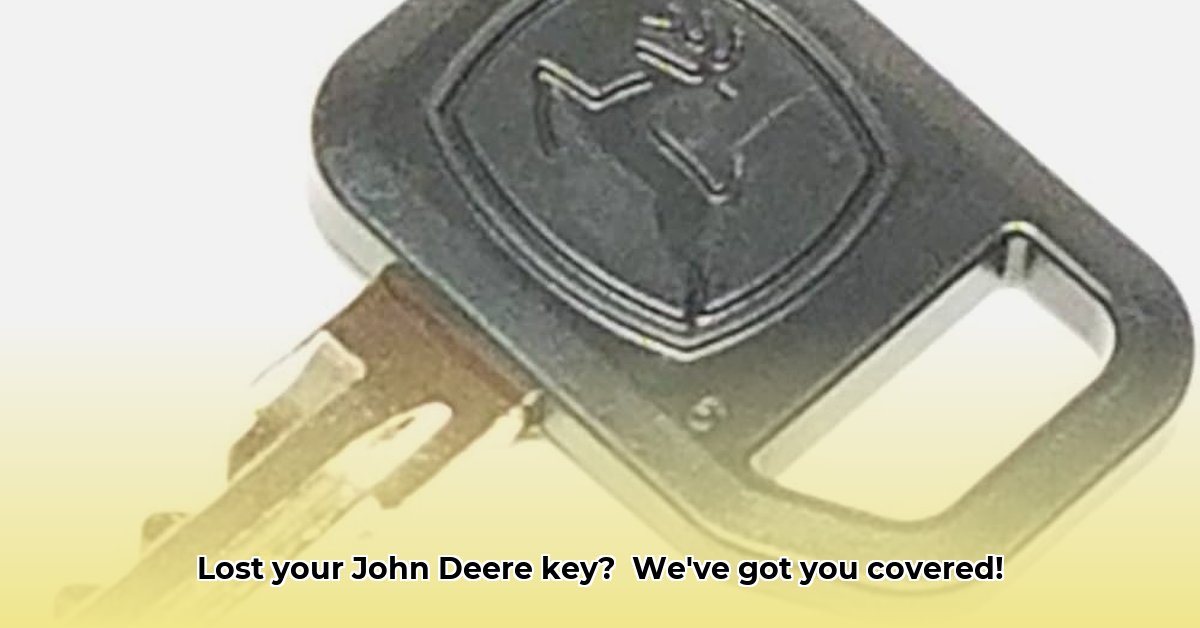
Replacing a John Deere tractor key can seem daunting, but this guide provides clear, step-by-step instructions for a successful replacement, minimizing downtime and ensuring your equipment's security. We'll cover everything from identifying the correct key to choosing between OEM and aftermarket options and implementing preventative measures. For more information on John Deere tractors, check out this helpful resource.
Identifying Your Key and Tractor Model
Before ordering a replacement, accurately identify your key and tractor model. Incompatibility leads to wasted time and money. The key itself (if you still have it) usually has a model number, such as the common GY20680. This number is crucial for finding the correct replacement. If the number isn't visible, consult your tractor's owner's manual. Knowing your tractor's model number helps too. Searching online with terms like "[Your Tractor Model Number] John Deere Key" is a good starting point. Accurate identification ensures a perfect fit and optimal performance.
How to Replace Your John Deere Tractor Key
Replacing your John Deere tractor key involves several steps; safety should always be prioritized. Always disconnect the battery's negative terminal before working on the ignition system. This prevents electrical shocks.
Step 1: Gather Supplies. You'll need your new key, the appropriate screwdriver (check your manual!), and a clean workspace. Having everything prepared minimizes interruptions.
Step 2: Disconnect the Battery. This crucial safety step prevents accidental electrical shocks. Always disconnect the negative terminal of your tractor's battery.
Step 3: Locate the Ignition Switch. The ignition switch's location varies by tractor model. Consult your owner's manual for precise instructions.
Step 4: Remove the Ignition Switch. This usually involves unscrewing a few screws or fasteners. Carefully note how the switch is removed for easy reassembly.
Step 5: Insert the New Key. Gently insert the new key. Resistance indicates a potential problem that needs attention before proceeding.
Step 6: Reassemble. Securely tighten all screws and fasteners. Rushing this step can lead to future problems.
Step 7: Reconnect the Battery. Once you've reassembled everything, reconnect the negative terminal of the battery.
Step 8: Test the Key. Turn the key in the ignition; a successful start validates the replacement. If it doesn't start, carefully review each step; you might have missed a detail or discovered a more significant mechanical issue.
Troubleshooting Common Problems
Even with careful preparation, issues can arise.
The Key Won't Turn: This usually signifies a problem beyond the key itself. The ignition switch may be faulty, or there could be a problem within the ignition system. Further investigation or professional help might be necessary. Have you considered checking for obstructions?
The Tractor Won't Start: While a faulty key is a possibility, check the battery's charge first; a dead or low battery is a frequent culprit. Inspect related components like wiring and connectors within your tractor's ignition system. Isn't a thorough inspection essential before making assumptions?
Compatibility Issues: Always verify key compatibility before purchasing. Purchasing the wrong key is a common, avoidable mistake.
OEM vs. Aftermarket Keys: A Cost-Reliability Trade-off
Choosing between an Original Equipment Manufacturer (OEM) key and an aftermarket alternative involves a cost-reliability trade-off.
| Feature | OEM Key | Aftermarket Key |
|---|---|---|
| Cost | Higher | Lower |
| Reliability | Superior, longer lifespan | Variable, potentially shorter lifespan |
| Warranty | Usually included | Often limited or nonexistent |
| Security Features | Enhanced security features | Security may be less robust |
OEM keys provide superior quality and reliability, often including warranties. Aftermarket keys are cheaper but may compromise on quality and longevity. The choice depends on your budget and the importance of reliability. Are you willing to risk potential downtime for the lower price?
Preventing Future Key Issues: Proactive Steps
Preventative measures reduce the likelihood of future key-related problems.
Proper Storage: Store keys in a safe, dry location, away from extreme temperatures and moisture. Is a designated storage spot implemented on your farm?
Regular Inspection: Periodically inspect for wear and tear. Addressing minor issues prevents major problems down the line. How often do you inspect your tractor's key?
Key Management Systems: For farms with multiple tractors, consider a key management system to improve security and tracking; it reduces the risk of loss or theft.
This guide provides general information. Always consult your tractor's owner's manual for specific instructions and safety precautions. If you are unsure about any step, seeking professional help is recommended. Remember, preventing problems is often cheaper and less frustrating than fixing them.